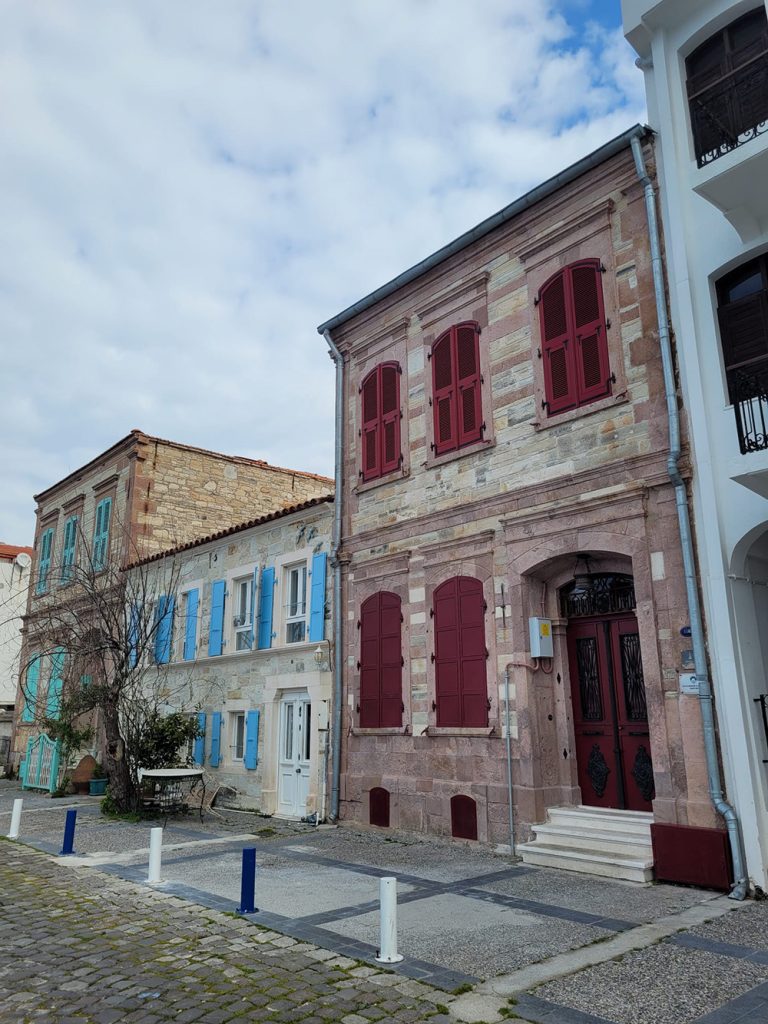
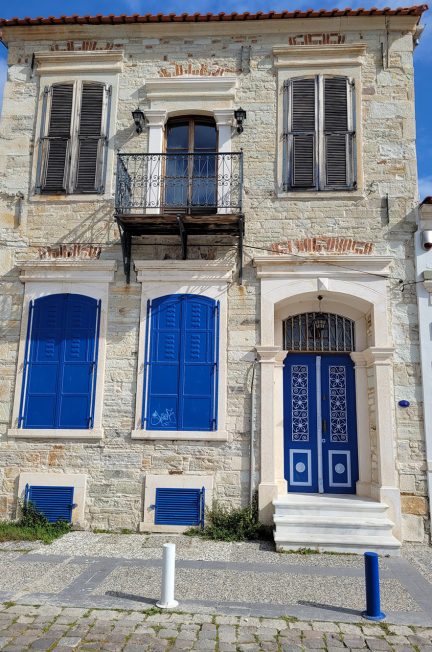
The settlement in the region is grouped along the shores of the Foça Bay and scattered around its surroundings. The surviving examples of civilian architecture in Foça date back to the second half of the 19th century. Houses, built in two stories in adjacent alignment, are arranged on both sides of the streets facing each other directly since there are no front gardens in this type of housing. The examples of civilian architecture named as “single houses” are located in the middle of spacious gardens. Additionally, there are houses known as Tower Houses.
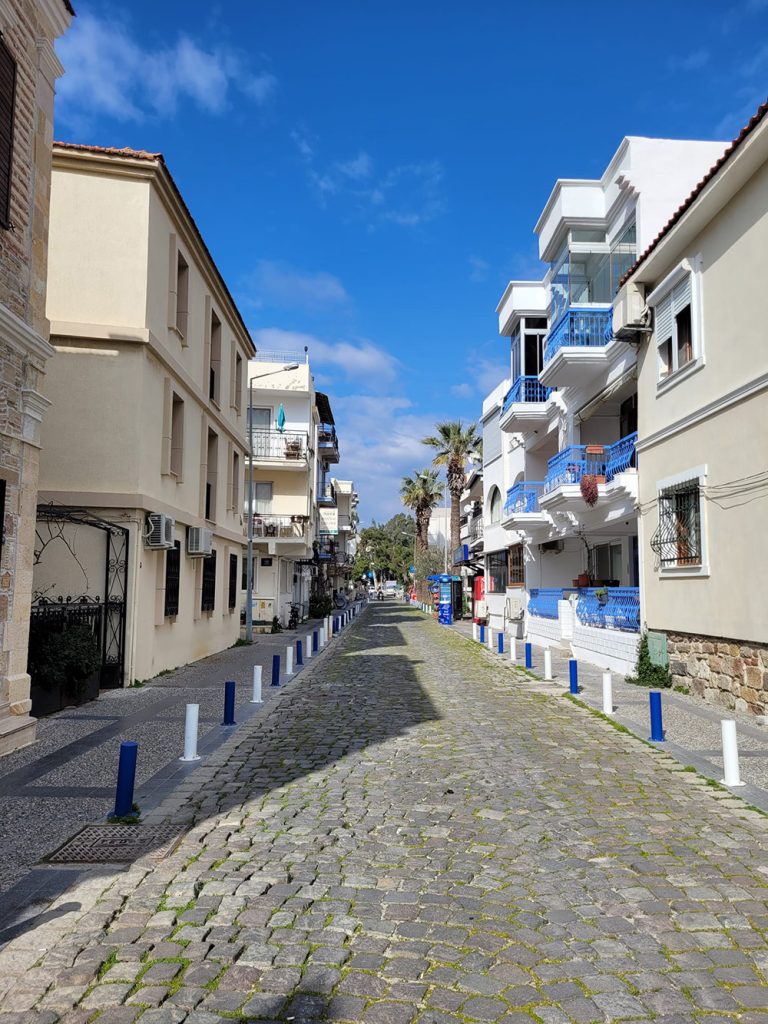
STONE HOUSES
As for the construction material of the houses, stone is used in the foundations, while brick and wood are used in the upper floors. All these houses have wooden roofs covered with tiles. The ground floors of the houses accommodate units like kitchens, pantries, and storage rooms. On the upper floor, accessed by stone stairs, rooms are arranged around a central hall. The projecting oriels or balconies supported by brackets on the front facade of the rooms are noteworthy. Wooden embellishments are prominent in the interiors. Furthermore, ceilings, doors, alcoves, and cupboard doors are adorned with various motifs. (*”Cumba”: A projecting bay window with three sides, facing the street or courtyard, in old Turkish houses.)
The symbol of Foça, the “Foça Stone” (Lithos Phokaikos), is used in the construction of stone houses. It is a unique stone that can be worked and has been used since ancient times. It perfectly reflects the local texture, being valuable, durable, long-lasting, unique, and healthy. It is extracted from the mountains of Foça and is soft when first extracted, making it easy to work with, but it hardens over time. It has a porous and sculptable texture similar to pumice stone. Stone houses remain cool in summer and warm in winter.
FEATURES OF STONE HOUSES
Generally known as Stone Houses among the locals, these buildings have rubble stone walls. Long cornerstones are used at the outer corners of the walls, and stone lintels are used at the door and window openings; one or two rows of stone eaves are built for all structures. Internal partition walls are made of “hımış” at the ground floor and “bağdadi” at the upper floor. The structures are similar in terms of material and facade characteristics. Some have basements. There are six different plan types for houses in the city center. Long stones placed on either side of the courtyard door. Wooden walls built with adobe or bricks.
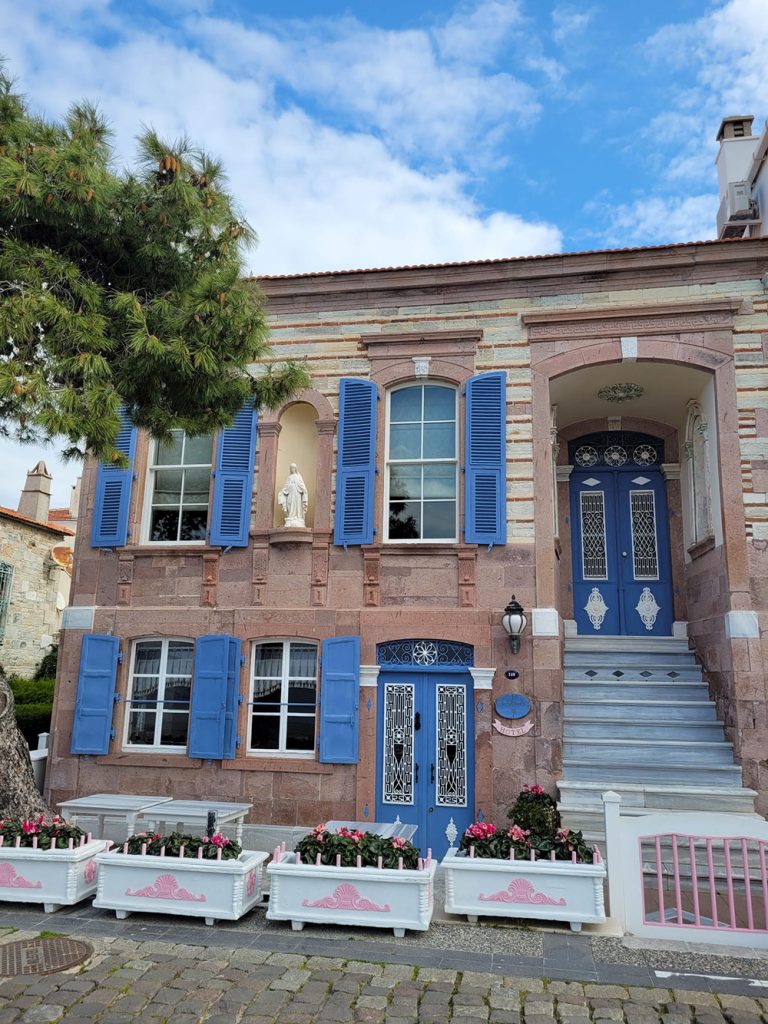
The exterior walls of Foça stone buildings are left unsurfaced. Exterior walls made of jointed stone are decorated with stone lintels at doors, windows, and sometimes with stone bands at roof and floor levels. Wooden shutters are used for windows and ground floors, while wooden shutters are used for upper floors. Entrance doors are made of wooden materials with glass panels and iron railings. Ceiling heights reach up to 4 meters on upper floors. Small doors in the middle of large doors.