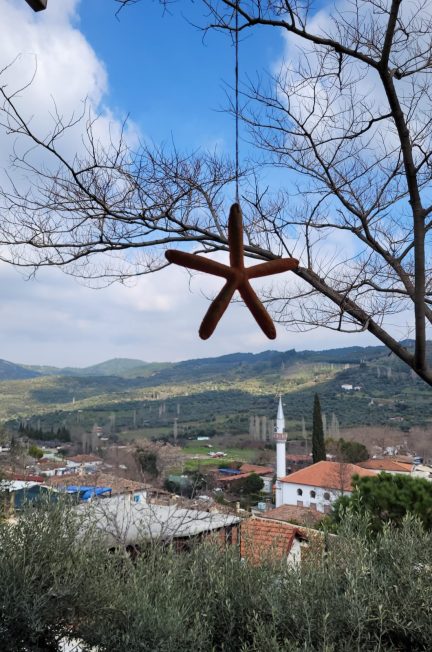
The village known by its original name Kırkınca, attributed to forty legendary individuals hitting the mountains in ancient times, underwent various phonetic transformations in Greek pronunciation, such as Kirkice, Kirkince, and finally Çirkince. During the early years of the Republic, at the instruction of the Governor of Izmir, Kazım Dirik, the name was officially changed to Şirince.
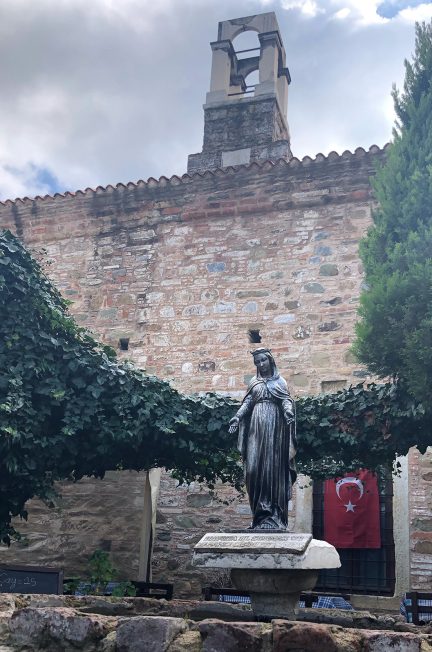
In the 19th century, it was a prominent Greek town with 1,800 households, particularly renowned for its fig exports. After the population exchange between Turkey and Greece in 1923, most of the Greeks departed, and Şirince was resettled by immigrants from Müştiyan (Moustheni) and Somokol (Domatia) villages in Kavala. The village boasts two Greek churches, and a distinctive feature is that no house obstructs the view of another.
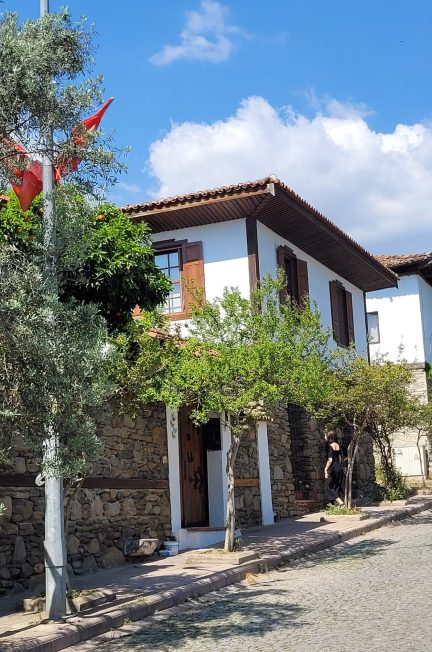
Crucially, it should be emphasized that in Şirince, no house obstructs the view of another, making it a significant characteristic of the village. According to Nisanyan, Şirince (Çirkince) had been a Greek village in the 14th or 15th century, which was later abandoned. In the 18th century, a group of Greeks from Southern Albania was resettled in Şirince, revitalizing the village. The Greeks spoke Turkish as their primary language upon their peculiar settlement. Examining the village’s architecture reveals the preserved style of Southern Albanian architecture, particularly from the city of Berat. Following the departure of the Greeks to Greece after the population exchange, Şirince was populated with immigrants from Greece.